
The Barringtons, who acquired the conventual site and part of the priory lands, had been seated in Hatfield since the 12th century, and by the 18th century owned most of the parish. As their estate was built up farms became larger, and the smallholders, once numerous, were gradually squeezed out.
The dissolution of the priory, and the growth of the Barrington estate, both affected the topography of the parish in and after the 16th century. Part of the conventual buildings seem to have been converted into the Priory House, which was the Barringtons’ residence from c. 1613 to c. 1700.
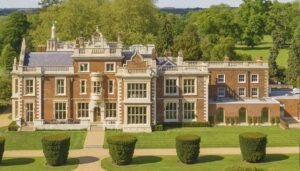 In the mid 18th century a new Barrington Hall was built north of the priory site and enclosed in a park. The Barringtons’ consolidation of farms brought about changes in the pattern of settlement outside the town. Their control of the town probably did nothing to check its decline, and may even have hastened it. By the early 19th century the market place had been cleared of all buildings except the market house, and that was removed c. 1862. At least one other house in High Street, the former vicarage, was pulled down in the 18th century and its site thrown open. Other houses may have been demolished on the western side of the town.
